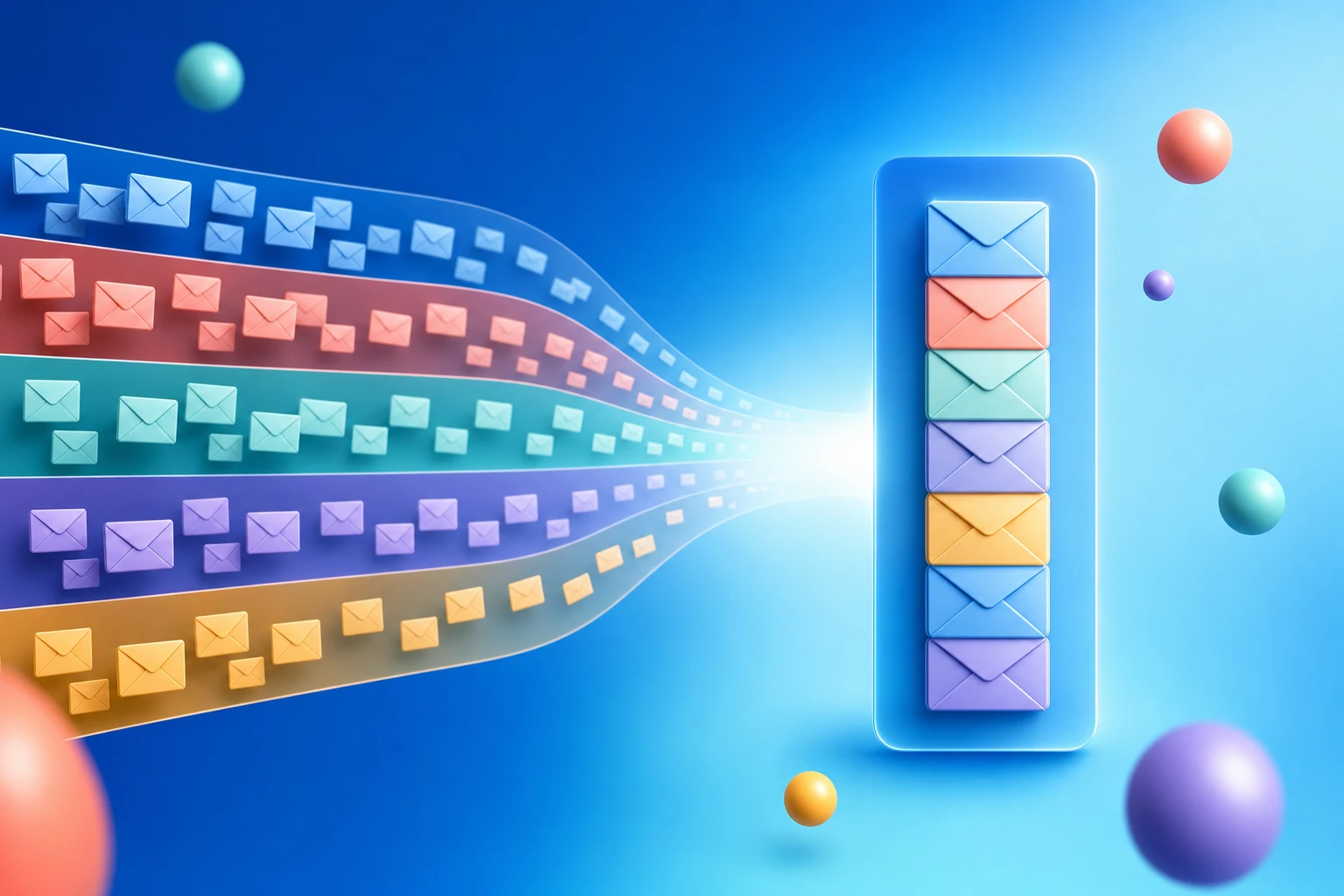
Your inbox is sorted by the wrong thing. It is ordered by whoever sent the most recent message, which in practice means it is ordered by whoever automates the most email. Newsletters, receipts, shipping updates and “someone commented on your document” all land with the same visual weight as a note from your closest colleague. The people you care about get buried under the senders who simply send the most.
BlueMail’s People-Centric view flips that. It organizes your inbox around people rather than senders, so the humans you actually talk to rise to the top and the machines settle quietly underneath.
The inbox got the sorting backwards
A conventional inbox treats every “from” address as equal. A reply from your manager and a promotional blast from a store you bought socks from once both count as “one unread message.” So you scan, you skim, you scroll, and you do the sorting in your head that the software should have done for you.
That made sense when email was mostly people writing to people. It stopped making sense years ago. Today most of what arrives is generated, scheduled or triggered by something you clicked. Ranking all of it purely by arrival time hands your attention to whatever is loudest, not whatever is important.
People, not addresses
People-Centric starts from a simple idea: a person is not an email address. The same human might reach you from a work account, a personal Gmail and a phone number, and they are still one person to you.
- Avatars everywhere. BlueMail puts a face (or a clean colored initial when there is no photo) on every conversation, so you recognize a thread before you read a word of it.
- One person, one identity. Messages from someone are grouped by who they are, not by which address they happened to use this time.
- The important rises. The people you exchange real messages with sit at the top. The senders you never reply to drift down where they belong.
Clusters do the grouping for you
The engine underneath is Clusters, BlueMail’s automatic grouping of related conversations. Instead of a flat list of individual emails, you see tidy groups: a project thread with three colleagues, a family plan, a single sender’s newsletters collected in one place.
You have seen it if you have looked at the app: a row that reads “Sam • Matt, You” is a cluster of the people in that conversation, not a wall of forwarded subject lines. It is the difference between “you have 47 unread” and “you have three conversations that need you.”
You decide who gets in
People-first only works if you control the front door. Active Screener is the quiet bouncer for new senders: the first time someone new writes, you decide whether they reach your inbox at all. Approve the ones you want, and everyone else stays out of the room. No blocklists to maintain, no unsubscribe treadmill.
The result is an inbox where the noise never had a chance to pile up in the first place.
What changes in practice
A few things people tell us once the inbox is organized around people:
- They stop “inbox archaeology.” Finding the last message from a person is now finding the person.
- They reply faster to humans, because humans are no longer camouflaged among the machines.
- They feel less behind. Three conversations that need a reply is a to-do list. Forty-seven unread is a guilt trip.
None of this asks you to file, tag or build rules. It is how the inbox behaves out of the box, and it works the same across your Unified Inbox or a single account.
Try it
Open BlueMail and switch on the People view from the inbox header. Watch the people you talk to float to the top and the rest settle down. Free on every device you use.